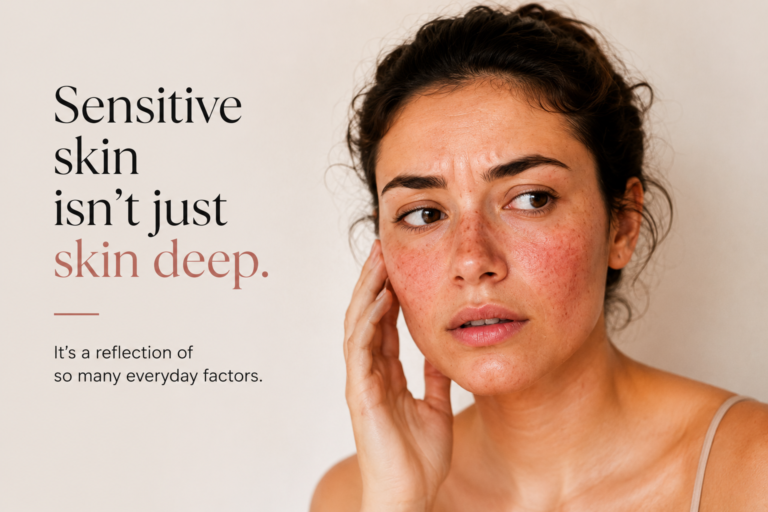
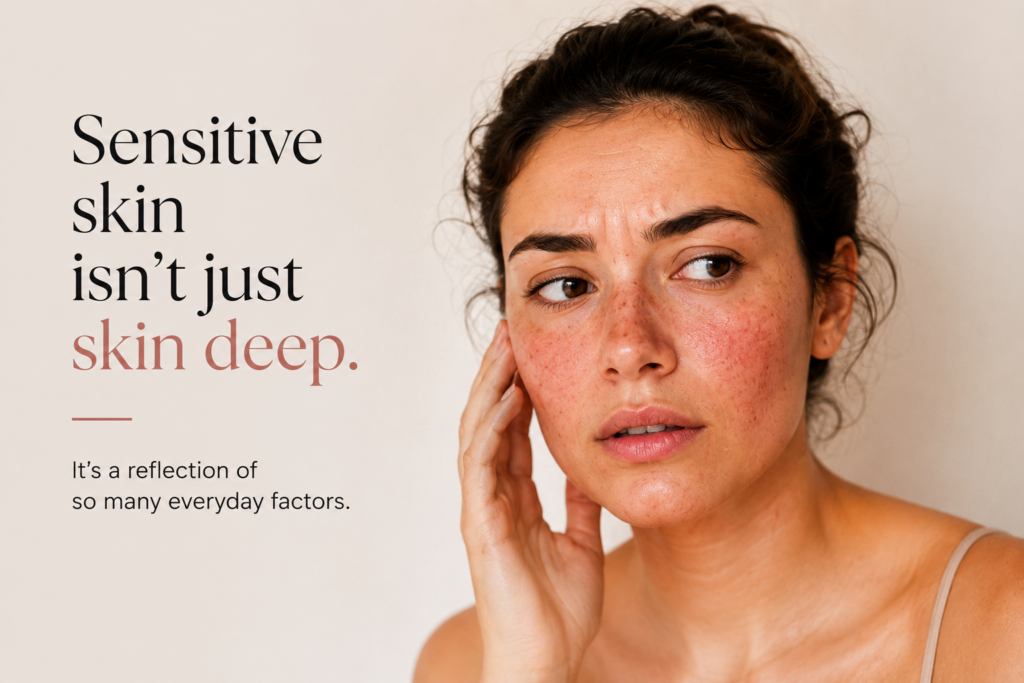
Reactive, sensitive skin is something we’re seeing more and more of — and often, it’s misunderstood.
Many assume it’s simply about using the wrong product or having “naturally sensitive” skin. But in reality, reactive skin is rarely random, and it’s rarely just surface-level.
It’s usually your skin communicating that something deeper needs support.
What Is Reactive Skin, Really?
When the body is under stress — whether that’s internal inflammation, lifestyle factors, or environmental triggers — the skin often becomes more reactive.
This can show up as:
• Redness
• Irritation
• Tightness
• Flare-ups
• Increased sensitivity to products
At its core, reactive skin is typically a combination of:
A compromised skin barrier + underlying inflammation + internal stressors
Understanding this is key — because it shifts the focus from “quick fixes” to true skin support.
1. Hydration — The Foundation of Calm Skin
When the skin lacks water, the barrier becomes weakened. This leads to increased water loss, allowing irritants to penetrate more easily and triggering inflammation.
Dehydrated skin is far more likely to feel tight, sensitive, and reactive.
Supporting hydration means:
• Consistent water intake (not all at once)
• Replenishing electrolytes
• Using barrier-supporting skincare (humectants + lipids)
• Avoiding over-exfoliation
When hydration is restored, the skin barrier strengthens — and reactivity begins to settle.
2. Anti-Inflammatory Nutrition — Skin Support From Within
Inflammation in the skin often reflects inflammation in the body.
This means that what you eat plays a direct role in how your skin behaves.
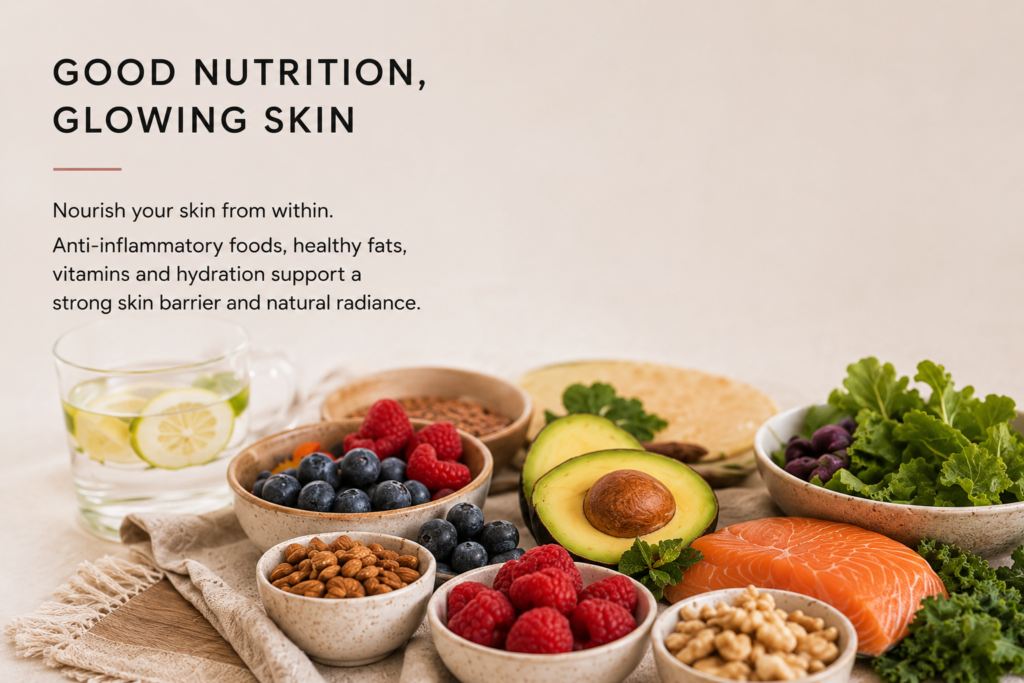
Focusing on anti-inflammatory foods can help to calm the system and support skin health at a deeper level.
Think:
• Colourful vegetables rich in antioxidants
• Berries and seasonal fruits
• Healthy fats like olive oil, nuts, and seeds
• Omega-3 rich foods such as oily fish
• Herbs and spices like turmeric and ginger
These foods work to reduce inflammation, support healing, and strengthen the skin barrier — helping the skin become more resilient over time.
3. Blood Sugar Balance — Reducing Hidden Inflammation
Frequent spikes in blood sugar are a powerful (and often overlooked) driver of inflammation in the body.
This internal stress can show up on the skin as redness, sensitivity, and flare-ups.
Insights from Jessie Inchauspé highlight how simple dietary habits can significantly reduce these spikes:
• Eating vegetables first to create a fibrous “mesh” in the gut (reducing glucose spikes by up to 75%)
• Taking apple cider vinegar before meals (can reduce spikes by up to 30%)
• Structuring meals: vegetables → protein & fats → carbohydrates
These practices help reduce oxidative stress and the release of free radicals — key contributors to inflammation and reactive skin.
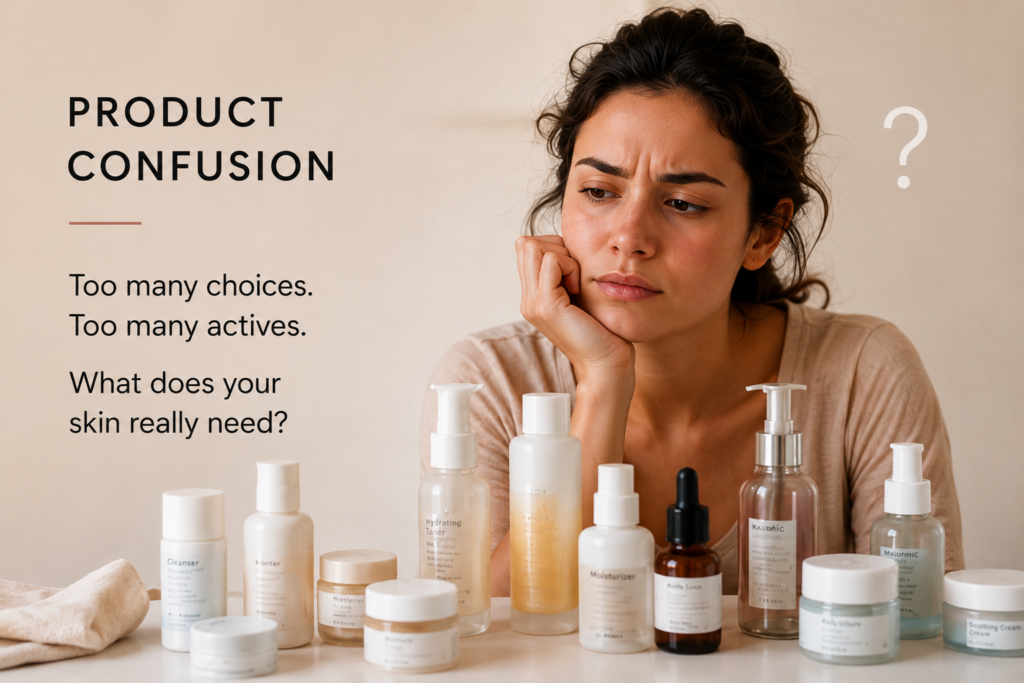
4. Alcohol & Sugar — Common Triggers
Excess sugar and alcohol can both fuel inflammation and disrupt the balance within the body.
Over time, this contributes to:
• Increased skin sensitivity
• Barrier disruption
• Worsening of flare-ups
Reducing intake doesn’t mean restriction — it means awareness.
Small, consistent changes can significantly improve how the skin responds.
5. Sleep & Nervous System Regulation — The Missing Piece
Your skin doesn’t just respond to what you apply or consume — it responds to how your body feels.
Poor sleep and chronic stress keep the body in a heightened state, increasing cortisol levels.
This can:
• Trigger inflammation
• Impair skin barrier function
• Slow healing
• Increase reactivity
Supporting your nervous system allows the body to shift into repair mode.
Simple practices include:
• Prioritising consistent, quality sleep
• Creating a proper evening wind-down routine
• Breathwork or gentle movement
• Morning light exposure to regulate your body clock
When the body feels safe, the skin becomes calmer.
6. UV Exposure — An External Trigger You Can’t Ignore
UV radiation is one of the most common external triggers of inflammation in the skin.
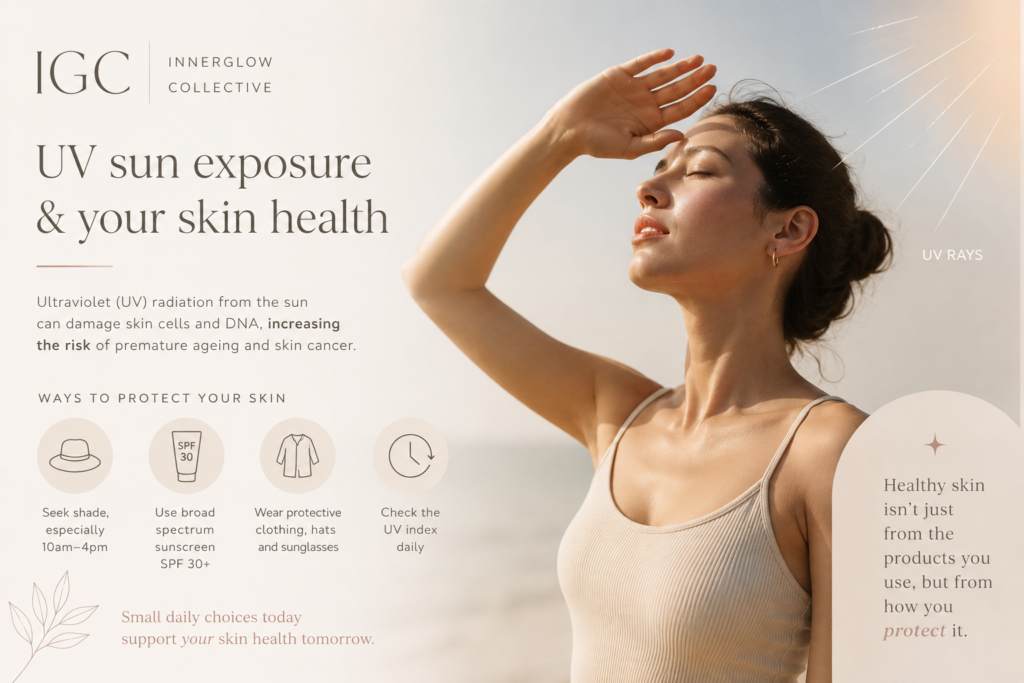
For reactive skin types, this can significantly worsen sensitivity and redness.
In conditions like Rosacea, UV exposure is a well-known trigger and can lead to:
• Increased flushing and redness
• Dilated blood vessels
• Heightened inflammation
• Barrier damage
Daily protection is essential — not just on sunny days, but every day.
This includes:
• Wearing SPF daily
• Reapplying throughout the day
• Using physical protection (hats, sunglasses, shade)
Consistent protection helps reduce cumulative damage and supports long-term skin stability.
A Holistic Approach to Reactive Skin
Reactive skin isn’t about doing more — it’s about supporting the skin smarter.
When you address hydration, inflammation, nutrition, stress, and environmental exposure together, the skin begins to stabilise.
It becomes stronger.
More resilient.
Less reactive.
Because ultimately —
When you support the body, the skin follows.